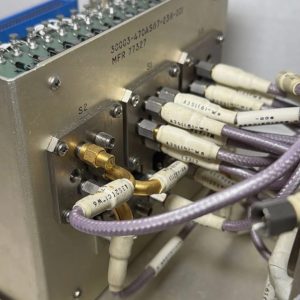
The Aviation Switching Module – NSN 4920-01-250-2696 (AS-IS / Untested) is a specialized aerospace electrical component offered for professional evaluation, restoration, testing, parts recovery, collection, or another suitable non-assumed application.
An Aircraft Switching Module may interact with test equipment, aircraft systems, electrical circuits, or support hardware, while an Aerospace Switching Module should not be energized without suitable technical information.
Every Aircraft Power Switching Module or Aircraft Signal Switching Module should be assessed individually because connectors, voltage, current, control logic, and system compatibility can vary significantly.
Accurate use of Aviation Control Module, Aircraft Electronic Switching System, Aerospace Switching Unit, and Aircraft Electrical Module terminology improves SEO without creating unsupported functional claims.
Overview of the Aviation Switching Module
The seller should provide clear photographs of every label, marking, connector, switch, control, mounting point, enclosure surface, and included accessory.
Unknown markings should be photographed and recorded rather than interpreted without support.
Understanding AS-IS and Untested Condition
The condition description should be understood as a limitation rather than a suggestion that the unit is probably here operational.
Professional evaluation protects the module, technician, test equipment, and any associated aerospace system.
Aircraft Circuit Selection Equipment
The product page should avoid assigning a cockpit, power-distribution, test-set, or mission-system function without evidence.
Missing knobs, guards, labels, connectors, covers, or fasteners may reduce completeness.
Rugged Aviation Module Design
Careful exterior evaluation can reveal evidence of previous use or damage before the unit is opened.
Proper connector protection preserves the Aerospace Switching Module for future testing or restoration.
Evaluating Aircraft Electrical Components
A burnt odor, melted material, soot, or arcing marks should be disclosed clearly.
If the enclosure is opened for professional inspection, the process should be documented with photographs and organized hardware control.
Maintaining Electrical Control Equipment
The exact interface must be established through diagrams, manuals, connector data, or verified system information.
Control labels and switch legends can provide useful clues, but they should not be used as the only source of technical identification.
Power Switching Module Inspection
A switch that moves normally may still contain burned, corroded, welded, or high-resistance electrical contacts.
Accurate reporting protects buyers seeking an Aircraft Power Switching Module for repair, parts, or research.
Aerospace Electrical Control Unit Evaluation
The repair process should preserve original markings and configuration whenever practical.
Detailed records support the long-term value of the Aerospace Electrical Control Unit.
Aircraft Signal Switching Module Uses
An Aircraft Signal Switching Module may route low-level, control, communication, measurement, or test signals between compatible equipment channels.
Missing or corroded bonding components may affect noise, interference, or reliability.
Professional Aviation Module Evaluation
Buyers should determine whether they need a direct replacement, restoration item, training aid, or parts source.
Inspection tags, modification plates, repair labels, and revision marks can provide important information.
Choosing an Aircraft Switching Unit
Detailed condition reporting supports fair commercial evaluation.
Removable demonstration leads or external training fixtures may preserve originality better than permanent alteration.
Aerospace Power Distribution Module Considerations
Internal conductive components can corrode or loosen during storage.
Bent brackets, enlarged holes, missing fasteners, or distorted mounting surfaces may complicate restoration.
Aircraft Electrical Control Unit Inspection
The inspection should distinguish cosmetic wear from damage that may affect electrical operation or mounting.
Testing results should identify exactly which switches, contacts, indicators, or circuits were evaluated.
Choosing an Aviation Power Control Module
The NSN’s federal supply classification may provide useful context, but the exact role should still be researched through item-specific records.
Technicians should inspect for capacitors, transformers, relays, damaged insulation, or hazardous residues before opening or testing the unit.
Aircraft Electronic Switching System Integration
A single module removed from the system may not be testable through ordinary standalone methods.
Intermittent switching problems can result from worn contacts, damaged connectors, corrosion, weak relays, cracked solder joints, unstable power, or harness faults.
Long-Term Storage of Aircraft Electronics
Connector caps should remain fitted, and the module should be supported without placing pressure on switches, knobs, cables, or mounting brackets.
Original packaging should receive additional protection rather than being used as the only shipping container.
Aircraft Electrical Module Buying Considerations
AS-IS equipment may offer attractive value when the purchaser has the knowledge and resources required for evaluation.
Transparent disclosure strengthens trust in an Aircraft Electrical Module transaction.
Untested Aviation Equipment Condition Checklist
The buyer should request enough information for an aviation electronics technician, aerospace-equipment specialist, or experienced surplus buyer to evaluate the unit.
- Determine whether cables, plugs, manuals, test leads, mounting hardware, storage cases, or companion components are included.
- Arrange qualified technical evaluation whenever condition, internal status, or testing requirements remain uncertain.
- Confirm the written invoice, AS-IS terms, payment protection, packaging method, shipping insurance, inspection period, and return conditions.
Professional Bench Evaluation
A methodical process reduces the risk of damaging rare aviation equipment.
Powered testing should proceed gradually while monitoring current, temperature, smell, noise, indicators, and unexpected behavior.
Aerospace Module Component Replacement
Temporary substitutions should not become undocumented permanent repairs.
The final product status should describe only the functions that were evaluated successfully.
Selecting a Surplus Aerospace Switching Unit
For the right purchaser, the unit can offer a useful foundation for technical research, controlled troubleshooting, component recovery, or legacy-equipment restoration.
An experienced aviation-electronics technician should assess the module before it is powered, installed, or connected to other equipment.
Whether buyers need an Aircraft Power Switching Module, Aerospace Electrical Control Unit, Aircraft Signal Switching Module, or Aviation Control Module, electrical specifications should be verified before testing.
With complete evaluation and continued care, the Aviation Switching Module – NSN 4920-01-250-2696 (AS-IS / Untested) can deliver a professional combination of restoration potential, component value, technical interest, and aerospace-equipment relevance.